Industry Insights & Technical Articles
Explore expert advice, transformer engineering innovations, and industry news from KROS Electric Co., Ltd.
Advanced Solutions for Modern Grids
Technical guides on distribution power efficiency and long-term asset optimization.
Solar & Dry-Type Transformer Standards
High-efficiency designs tailored for renewable energy generation and eco-friendly infrastructure.
Engineering Excellence & Global Standards
35+ years of certified manufacturing precision powering global energy transformation.
10 Tips for Buying BIS Certified Distribution Transformers?
Table of Contents
- Define BIS Certification and Its Role in Distribution Transformer Safety
- Identify the Transformer Specifications Required for Your Power System
- Verify the Manufacturer’s BIS License and Product Certification Details
- Compare Efficiency, Capacity, Materials, and Protection Features
- Evaluate Testing Records, Warranty Terms, Delivery, and After-Sales Support
- FAQS
- Conclusion
- Related Posts
Buying BIS Certified Distribution Transformers is not merely a paperwork exercise. It is a decision about safety, operating stability, and long-term maintenance costs. A transformer may carry a certification mark, yet its actual performance still deserves careful examination. Buyers should review the applicable Indian Standard, certification scope, manufacturing location, and approved product rating. Check the details.
R. K. Sharma, an independent transformer quality consultant with field experience in utility projects, advises, “A certificate opens the inspection; test evidence closes it.” His observation is practical. Request routine test reports for winding resistance, voltage ratio, insulation strength, losses, and temperature rise. Compare the reported values with the purchase specification. Examine the nameplate closely. It should match the quotation, drawings, and test documents without unexplained differences.
The ten tips in this guide focus on decisions that are easy to overlook. They include evaluating core material, checking oil leakage protection, confirming impulse withstand requirements, and assessing supplier service support. Ask how the manufacturer handles failed tests, spare parts, and warranty claims. Visit the factory when project value justifies the cost. A clean assembly area, calibrated instruments, sealed oil drums, and traceable inspection records reveal more than polished brochures.
Some judgments remain imperfect. Price comparisons can hide differences in losses, accessories, or delivery conditions. Certification alone cannot predict every field failure. That is why buyers should combine BIS verification, witnessed testing, technical review, and supplier references. Careful purchasing may take longer, but a transformer installed beside a hospital, factory, or residential feeder cannot be treated as a simple catalogue item. Reliability starts before energization.
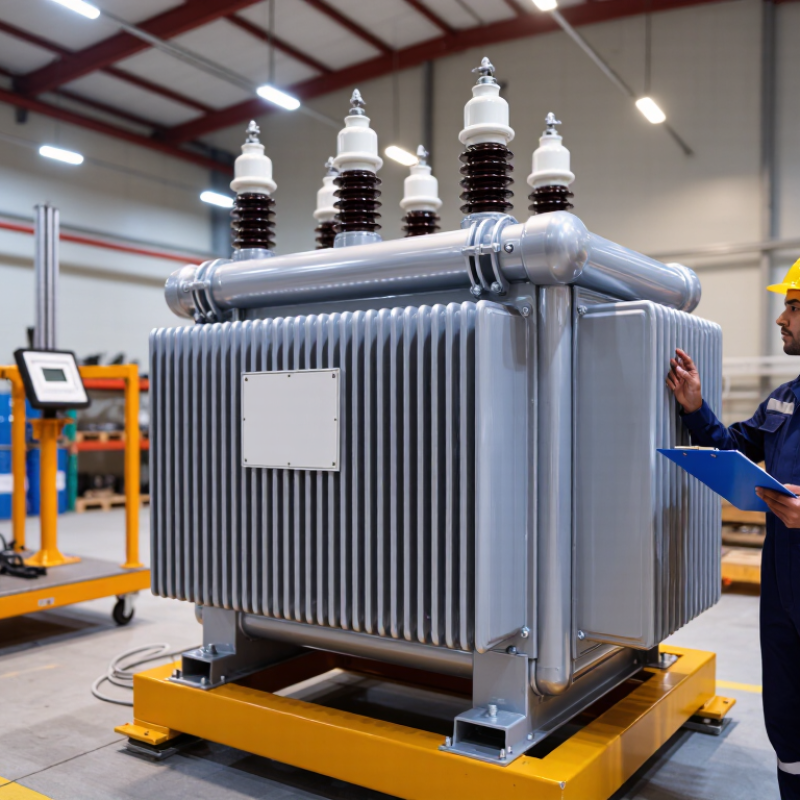
Define BIS Certification and Its Role in Distribution Transformer Safety
BIS certification confirms that a distribution transformer conforms to relevant Indian Standards. It is issued after product testing and manufacturing-site assessment. For distribution transformers, checks may cover insulation strength, temperature rise, efficiency, losses, oil quality, and short-circuit performance. These requirements reduce risks such as overheating, fire, premature failure, and unsafe voltage conditions. Certification is useful evidence, not a complete safety guarantee.
Tip 1: Check the BIS mark, license number, standard reference, and product scope. The details should match the transformer’s rated capacity and design. A copied certificate is not enough. Confirm its validity through official BIS records, and request recent routine and type-test reports. Ask whether testing covered the exact model, not only a similar unit.
Tip 2: Compare the certified ratings with your site requirements. Review voltage ratio, frequency, impedance, cooling method, vector group, and declared losses. Inspect the nameplate carefully. Small mismatches can create large operating problems. Also examine bushings, earthing points, oil-level indicators, gaskets, and protective devices before acceptance. These physical details often reveal poor preparation.
Tip 3: Treat installation and maintenance as part of transformer safety. Keep clearances around the tank and provide suitable surge protection. Record oil temperature, leakage, noise, and load behavior during service. I have seen paperwork look complete while site conditions were overlooked. Certification cannot correct an overloaded feeder, weak earthing, or neglected inspection schedule.
BIS-Certified Distribution Transformer Buying Checklist
Bureau of Indian Standards (BIS) certification helps demonstrate that a distribution transformer conforms to applicable Indian safety and performance requirements. Use these ten verification points when evaluating a supplier. Each bar represents one recommended buyer check, not a test score or compliance percentage.
Key point: Ask for current BIS licence details, the applicable Indian Standard, nameplate information, routine and type-test documentation, material traceability, warranty terms, and installation or acceptance-test support before purchase.
Identify the Transformer Specifications Required for Your Power System
10 Tips for Buying BIS Certified Distribution Transformers
Identify the transformer specifications required for your power system before comparing certificates or prices. Start with the expected load in kVA, not only today’s consumption. Include motors, lighting, heating equipment, and planned expansion. A transformer operating near its limit may run hot during summer afternoons. Leave a practical capacity margin, but avoid excessive oversizing because light loading can increase costs and losses.
Record the primary and secondary voltages, frequency, phase arrangement, and required vector group. Confirm whether the system needs an off-circuit or on-load tap changer. Impedance matters too. A low value may increase fault current, while a high value can cause voltage drops during motor starting.
Specify the insulation level, cooling method, temperature rise, and installation altitude. Outdoor units may require suitable enclosures, corrosion protection, and verified noise limits. Small details matter.
Ask for test reports that match the exact transformer offered. Check routine test results, loss figures, winding resistance, ratio accuracy, insulation performance, and short-circuit withstand evidence.
The BIS marking should support genuine compliance with the applicable Indian standard, not replace engineering review. Match the specification sheet with the purchase order and nameplate.
This step is often rushed. It should not be. A field inspection should also verify cable terminals, earthing points, oil condition, clearances, and protection settings.
I have seen specifications copied from older projects, with the wrong voltage still unnoticed. Recheck everything.
Verify the Manufacturer’s BIS License and Product Certification Details
Buying a BIS-certified distribution transformer requires more than checking for a BIS mark on the nameplate. Request the manufacturer’s BIS licence number, applicable Indian Standard, and certification scope. Then verify these details through the official BIS online database. The licence should match the legal manufacturer, factory address, transformer type, and rated capacity. A valid certificate with the wrong product scope is not enough.
Compare the certificate with the transformer’s technical documents. Check the model, voltage ratio, frequency, insulation level, loss values, and manufacturing location. Ask for recent routine and type test reports from an approved laboratory, not only a supplier-created summary. The serial number, rating plate, purchase quotation, and inspection records should tell the same story. Small differences matter.
Be careful with expired or altered documents. A clear scan can still hide an outdated licence. Contact BIS or the registered manufacturer when dates, addresses, or licence numbers appear inconsistent. Keep copies of every verification record before placing the order. This creates an audit trail for consultants, inspectors, and future maintenance teams. No document check is perfect. I would also inspect the sealed unit, packaging, and factory test records before acceptance, because paperwork and physical equipment do not always match.
Compare Efficiency, Capacity, Materials, and Protection Features
Buying a BIS-certified distribution transformer requires more than checking a certificate. Compare efficiency at the actual load profile, not only the catalog rating. A unit operating near 50–70% load may waste less energy across a year. Ask for guaranteed losses, test reports, and the applicable BIS standard. Confirm that certification covers the exact model, voltage class, and manufacturing location. Small mismatches matter.
Capacity should reflect starting currents, future expansion, ambient temperature, and permissible overloads. Oversizing can reduce loading efficiency and increase purchase costs. Undersizing causes heat, voltage drop, and shorter insulation life. Review winding material, core steel grade, insulation system, tank construction, gaskets, and protective coatings. Copper windings may offer compact performance, while aluminium can reduce weight and cost. The right choice depends on joints, losses, maintenance, and budget. Cheaper is not always economical.
Protection features deserve a physical, not merely written, comparison. Check temperature indicators, pressure relief devices, surge arresters, Buchholz relays where applicable, earthing points, and enclosure sealing. Match protection to indoor, outdoor, dusty, coastal, or humid service. Request routine and type-test evidence from an accredited laboratory. Inspect terminal clearances and cable access before approval. Paper compliance can hide installation problems. A checklist can still miss something. Leave space for ventilation, inspection, and safe maintenance around the transformer.
| Tip | Buying Dimension | Typical Data or Options | What to Compare | Recommended Verification |
|---|---|---|---|---|
| 1 | Confirm BIS Applicability | Distribution transformers are commonly assessed under applicable Indian Standards such as IS 1180 for outdoor oil-immersed distribution transformers and relevant parts of IS 2026. | The exact standard, revision, voltage class, capacity range, and product configuration covered by the certification. | Request the current BIS licence details, scope, marking information, and test documentation. Match the certified scope with the proposed transformer. |
| 2 | Select the Correct Capacity | Common distribution ratings include 25, 63, 100, 160, 250, 315, 500, 630, 1000, and 1600 kVA; larger ratings may also be available. | Present maximum demand, diversity factor, motor-starting current, future load growth, and permissible loading. | Use a load study and avoid selecting a transformer solely from connected load. Check the expected peak load and maintain a practical expansion margin. |
| 3 | Compare Voltage and Vector Group | Typical primary voltages are 11 kV, 22 kV, or 33 kV. A common secondary voltage is 433 V line-to-line. Dyn11 is widely used, but the system requirement must govern. | Primary voltage, secondary voltage, frequency, phase arrangement, neutral availability, vector group, and impedance. | Match the nameplate data with the utility connection, downstream switchgear, earthing design, and parallel-operation requirements. |
| 4 | Evaluate Energy Efficiency | Efficiency depends on load. No-load loss is present continuously, while load loss increases approximately with the square of current. Typical distribution-transformer efficiency at a favorable load can exceed 98%. | Guaranteed no-load loss, load loss at reference temperature, total loss, impedance, and efficiency at 25%, 50%, 75%, and 100% load. | Compare guaranteed losses using the same rating, voltage, frequency, temperature reference, and applicable efficiency or energy-efficiency requirements. |
| 5 | Check Core Material and Design | Modern units generally use grain-oriented electrical steel with insulated laminations. Step-lap construction and controlled flux density can reduce core loss and noise. | Core steel grade, lamination thickness, joint construction, flux density, no-load loss, and audible sound level. | Ask for routine test results for no-load loss, excitation current, insulation resistance, and sound level where required by the project specification. |
| 6 | Compare Winding Materials | Copper provides higher electrical conductivity; aluminum can reduce weight and material cost but requires suitable conductor sizing and reliable joint design. | Conductor material, current density, winding arrangement, insulation system, temperature-rise limit, and connection quality. | Compare total ownership cost rather than purchase price alone. Review load loss, temperature-rise test results, winding resistance, and terminal construction. |
| 7 | Review Insulation and Temperature Rise | Oil-immersed transformers use liquid insulation and solid cellulose insulation. Actual allowable temperature rise depends on the applicable standard, insulation system, ambient conditions, and cooling method. | Insulation level, impulse withstand rating, oil quality, cooling method, ambient temperature, and temperature-rise limits. | Check lightning impulse and power-frequency withstand ratings, oil test results, temperature-rise test data, and site ambient-temperature assumptions. |
| 8 | Assess Protection Features | Available features may include a conservator tank, silica-gel breather, oil-level indicator, pressure-relief device, thermometer, winding-temperature indicator, Buchholz relay, and surge arresters. | Protection package suitability for sealed or conservator-type construction, transformer rating, installation location, and fault exposure. | Define each required accessory in the purchase specification and confirm alarm, trip, relay-contact, and surge-protection interfaces before ordering. |
| 9 | Verify Mechanical and Environmental Protection | Outdoor units require weather-resistant paint or coating, suitable cable-box or bushing arrangements, adequate clearances, and corrosion protection. Enclosure protection should be specified where applicable. | Tank construction, paint system, gasket quality, cable entry, radiator protection, lifting points, oil containment, and installation altitude. | Check dimensional drawings, foundation loads, transport weight, maintenance access, corrosion category, ventilation, drainage, and local fire-safety requirements. |
| 10 | Demand Testing and Lifecycle Support | Routine checks commonly include winding resistance, ratio and phase displacement, impedance, load loss, no-load loss, dielectric tests, insulation resistance, and leak inspection. | Factory acceptance tests, type or design-test evidence, documentation, warranty terms, spare parts, oil sampling, and maintenance intervals. | Make delivery conditional on approved drawings, inspection records, test certificates, nameplate verification, oil quality results, and a documented commissioning checklist. |
Evaluate Testing Records, Warranty Terms, Delivery, and After-Sales Support
Buying a BIS-certified distribution transformer requires more than checking a certificate number. Ask for the current license, covered product range, applicable standard, and matching nameplate details. Confirm that the certificate belongs to the exact model and rating. Request routine test records, including insulation resistance, winding resistance, ratio, and temperature-rise results. Type-test reports should also show laboratory details, test dates, and equipment identification.
Do not accept loose paperwork.
I once treated a clean-looking report as sufficient. That was a mistake. Serial numbers, signatures, and test dates must connect the records to your transformer. A factory inspection before dispatch can reveal damaged bushings, loose connections, or poor paintwork. Review the warranty carefully. Check its duration, exclusions, transport responsibility, and response time for failures. A long warranty means little without practical support.
Delivery planning deserves equal attention. Confirm approved drawings, production milestones, packing methods, delivery conditions, and penalties for avoidable delays. Ask how moisture protection will be maintained during storage and transport. After-sales support should include installation guidance, commissioning assistance, spare-part availability, and a clear escalation process. Request contact details for qualified service engineers, not only a sales representative. Keep written records of every promise. Small gaps often appear after payment. Your checklist should also reflect local site conditions, because a technically compliant transformer may still perform poorly in heat, dust, or unstable voltage environments.
FAQS
Calculate expected load in kVA, including motors, lighting, heating, and planned expansion. Leave a practical capacity margin. Avoid excessive oversizing. A lightly loaded unit may increase costs and energy losses. Summer afternoons can reveal hidden capacity problems.
Confirm primary voltage, secondary voltage, frequency, phase arrangement, and vector group. Specify whether an off-circuit or on-load tap changer is needed. Also review impedance, insulation level, cooling method, temperature rise, and installation altitude. Small omissions can create expensive corrections.
Low impedance can increase fault current. High impedance may cause voltage drops during motor starting. The correct value depends on system protection and starting requirements. This choice deserves careful engineering review.
Outdoor transformers may need suitable enclosures, corrosion protection, and verified noise limits. Check cable terminals, earthing points, clearances, and protection settings during inspection. Do not assume the installation environment is gentle.
Request reports matching the exact transformer supplied. Review routine tests, losses, winding resistance, ratio accuracy, insulation performance, and short-circuit withstand evidence. Use reports from an approved laboratory when available. Supplier summaries alone may be incomplete.
Request the manufacturer’s licence number, applicable standard, certification scope, factory address, and rated capacity. Verify them through the official certification database. The documents should match the legal manufacturer and actual production site. A certificate with the wrong scope is insufficient.
Compare the certificate, quotation, nameplate, serial number, inspection record, and technical specification. Check voltage ratio, frequency, insulation level, loss values, model, and manufacturing location. Small differences matter. I have seen old specifications retain the wrong voltage.
Inspect the sealed unit, packaging, factory records, cable terminals, earthing, oil condition, clearances, and protection settings. Check licence dates and addresses for inconsistencies. Keep every verification record for future maintenance and audits. Paperwork and equipment do not always match.
Conclusion
Buying BIS Certified Distribution Transformers requires more than comparing prices. Start by understanding what BIS certification means: it indicates that the transformer has been assessed against applicable safety and performance standards, helping reduce risks during operation. Before selecting a unit, identify your power system’s voltage, frequency, load capacity, installation environment, cooling method, and future expansion needs. These specifications will help ensure the transformer is properly sized and compatible with your network.
Next, verify the manufacturer’s BIS license, certification validity, and product details through reliable documentation. Compare important factors such as efficiency, rated capacity, core and winding materials, insulation quality, temperature control, and protection features. Review testing records to confirm that the transformer has undergone appropriate routine and performance checks. Finally, evaluate warranty coverage, delivery schedules, installation assistance, spare-parts availability, and after-sales support. A careful assessment of compliance, technical performance, reliability, and service will help you choose a safe and cost-effective transformer for long-term power distribution.

Blog Tags: