A flame retardant dry type transformer transfers electrical power without using liquid insulation. Its windings are insulated with solid materials, often resin or treated insulation systems, and cooled by air. The design can reduce the amount of combustible material near the transformer. It does not make the equipment fireproof. That distinction matters.
Flame Retardant Dry Type Transformers are often considered for buildings, factories, and other indoor spaces where limiting fire spread is important. Picture a compact unit in a plant room: ventilation grilles need clear airflow, cable connections require inspection, and dust can collect around the enclosure. These practical details affect safe operation as much as the transformer’s material choices. Flame-retardant performance depends on the complete design, including insulation, enclosure, installation, and verified product ratings. A label alone is not enough.
This guide explains how these transformers work, what flame retardancy means, and where dry-type construction may be useful. It also covers selection factors such as voltage, load, cooling, noise, and maintenance access. Requirements vary by application and location, so buyers should review manufacturer documentation and consult qualified electrical professionals. One point deserves careful thought: choosing a flame-retardant model cannot replace good installation or routine inspection. The name sounds reassuring, but the details still matter.
Definition and Core Components of a Flame Retardant Dry-Type Transformer
What Is a Flame Retardant Dry Type Transformer?
Definition and Core Components of a Flame Retardant Dry-Type Transformer
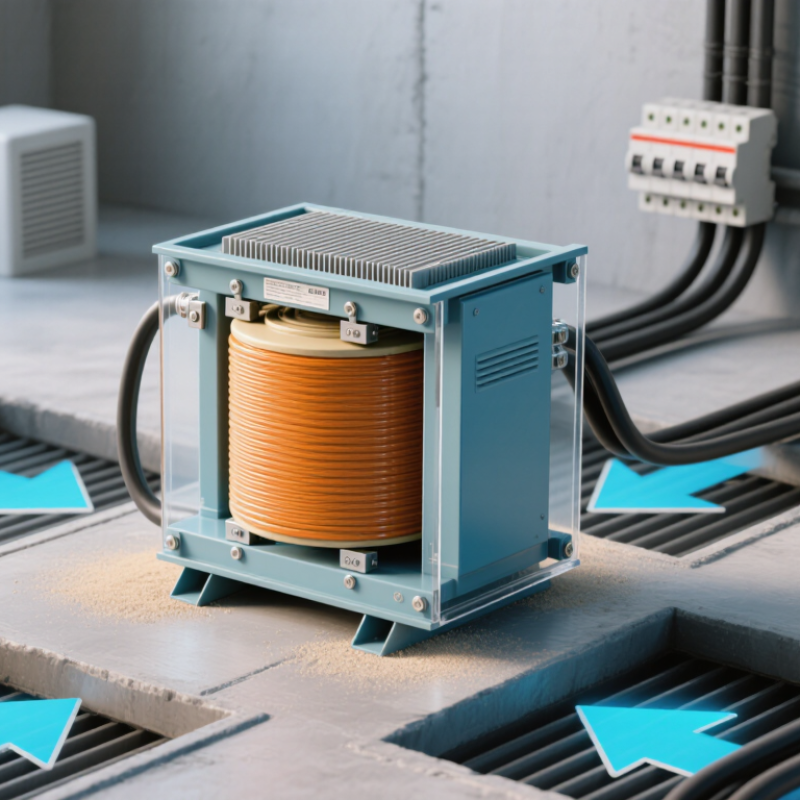
A flame-retardant dry-type transformer transfers electrical energy without an insulating oil bath. Its core is built from stacked electrical-steel laminations, which guide magnetic flux and help limit energy losses. Copper or aluminum windings carry current around the core. Solid insulation, often resin-based, separates the windings and may help resist ignition and slow flame spread. No oil bath. “Flame retardant” does not mean fireproof: heat, damaged insulation, or poor maintenance can still create hazards.
The enclosure protects live components, while ventilation ducts or fans help remove heat. Temperature sensors can alert operators when winding temperatures rise. IEC 60076-11 defines fire-behavior classifications, including F1; buyers should check the actual test documentation rather than assume every dry-type unit has the same performance. A resin casting can also crack, a detail that is easy to overlook during visual checks. The IEA’s Electricity 2024 report projects global electricity demand will grow by an average of 3.4% annually from 2024 to 2026, increasing pressure on distribution equipment. That forecast is broad, not transformer-specific, but it underscores why thermal design and routine inspection matter.
| Component or Topic | Description | Function and Key Considerations |
|---|---|---|
| Definition | A dry-type transformer transfers electrical energy between circuits without using liquid insulation or cooling oil. Its windings are insulated with solid materials and are cooled by air, either naturally or with fans. | “Flame retardant” describes design choices intended to limit ignition or flame spread. It does not mean the transformer is fireproof; performance depends on materials, construction, installation, and applicable test requirements. |
| Magnetic core | Typically assembled from thin, insulated electrical-steel laminations. | Provides the magnetic path between windings. The laminated construction helps reduce eddy-current losses; core design also affects no-load losses, sound, and temperature rise. |
| High-voltage winding | A coil made from copper or aluminum conductors, insulated for its rated voltage. Construction varies by transformer design. | Receives electrical energy at the higher-voltage side. Conductor insulation and winding clearances are selected to meet electrical, thermal, and mechanical requirements. |
| Low-voltage winding | A copper or aluminum coil electrically separated from the high-voltage winding by an insulation system. | Delivers power at the lower-voltage side. Its conductor size and arrangement are designed for the rated current and the transformer’s thermal and short-circuit requirements. |
| Solid insulation system | May include materials such as electrical paper, pressboard, resin, glass-fiber reinforcement, or other insulating materials selected for the design. | Separates energized parts and withstands electrical and thermal stresses. Flame behavior and temperature capability depend on the specific materials and tested insulation system. |
| Winding encapsulation or impregnation | Depending on the design, windings may be cast in resin or vacuum-pressure impregnated with insulating varnish. | Can provide insulation and mechanical support, and may help protect windings from moisture or contaminants. These processes are design options, not features of every dry-type transformer. |
| Cooling passages and airflow | Air gaps or ducts allow heat to move away from the core and windings. Cooling may be natural-air or fan-assisted, according to the design and rating. | Adequate ventilation is essential for keeping operating temperatures within specified limits. Required clearances and airflow must follow the installation instructions. |
| Temperature monitoring | Sensors, commonly resistance temperature detectors or thermistors, may be installed to monitor winding or other specified temperatures. | Monitoring can provide alarms or initiate control actions when configured with compatible protection equipment. Sensor arrangement and settings are product-specific. |
| Terminals and tap connections | Electrical connection points link the windings to the supply and load. Some designs include de-energized tap links or a tap changer. | Enable circuit connection and, where provided, adjustment of the voltage ratio within the specified range. Connections must be made according to the nameplate and wiring diagram. |
| Enclosure (if fitted) | A ventilated enclosure may provide protection against contact and environmental exposure. Its construction and ingress protection rating vary by application. | An enclosure does not by itself establish a fire-resistance rating. Maintain the specified ventilation, access, and installation clearances. |
| Typical selection checks | Review rated power, primary and secondary voltages, frequency, vector group, impedance, temperature rise, cooling method, and environmental conditions. | Confirm compliance with the applicable electrical and fire-safety requirements for the installation. Use the transformer nameplate and manufacturer documentation for final specifications. |
FAQS
Alternating current flows through the primary winding and creates a changing magnetic field in the steel core. This field induces voltage in the secondary winding without a direct electrical connection.
No. The output frequency stays the same. The winding turns ratio changes voltage, while current varies with voltage and the connected load.
Its solid insulation is designed to resist ignition and slow flame spread. Not fireproof. Materials and construction help reduce risk, but they have limits.
Dry-type units release heat into the surrounding air. Keep ventilation openings clear; dust on a grille can restrict cooling. Easy to miss.
Without an oil-filled tank, there is less risk of an oil spill. This can simplify some indoor installations, but heat still needs an exit path.
Qualified technicians should check airflow, connections, grounding, insulation surfaces, and signs of overheating or tracking. Follow the unit’s inspection schedule and applicable care guidance.
No. It can reveal hot connections while the transformer is under load, but it does not replace de-energized inspection.
Load, room temperature, damp air, dust, and loose connections can affect operating temperatures and performance. A quiet, clean-looking unit may still hide a developing fault.
Conclusion
A flame-retardant dry-type transformer transfers electrical power between circuits by electromagnetic induction, without using liquid insulation or coolant. Its core and windings are enclosed in insulation materials designed to resist ignition and limit flame spread. Together, these components support voltage conversion while helping protect the transformer from electrical and thermal stresses.
Flame Retardant Dry Type Transformers are commonly used in buildings and other indoor environments where fire safety, reduced leakage risk, and simpler installation are important. Their construction can make them suitable for locations such as commercial facilities, industrial sites, and public infrastructure, although capacity, ventilation, and environmental conditions must be considered. They generally require less fluid-related upkeep than liquid-filled units, but still need regular inspection, cleaning, and checks for overheating, dust buildup, and insulation wear to maintain reliable operation.