Choosing China’s best High Voltage Transformer Testing Services requires more than comparing prices or laboratory websites. Reliable testing protects transformers, substations, workers, and long-term investment. The right provider combines field experience, calibrated equipment, qualified engineers, and transparent reporting. It should understand factory acceptance tests, commissioning checks, insulation resistance, winding resistance, turns ratio, partial discharge, and dielectric strength.
Look for laboratories operating under recognized quality systems, such as ISO/IEC 17025, with relevant CNAS accreditation where applicable. Experienced teams should explain test limits clearly and follow suitable IEC, IEEE, or national standards. Their reports should identify the transformer model, test conditions, instruments, calibration status, measured values, and acceptance criteria. Small details matter. A loose terminal, unstable test lead, or humid test room can affect results.
China offers many capable testing companies, but “best” depends on project voltage, transformer design, delivery schedule, and required certification. Some providers have excellent equipment yet weak communication. Others respond quickly but offer limited diagnostic depth. That difference becomes visible when a 220 kV transformer shows irregular discharge readings at the site. Ask how engineers investigate abnormal data, protect personnel, and repeat tests under controlled conditions.
Experience matters greatly.
This guide reviews High Voltage Transformer Testing Services through practical, technical, and reliability-focused criteria. It considers laboratory competence, reporting quality, safety procedures, service coverage, and customer evidence. No provider is perfect. Even strong laboratories may need clearer documentation or better scheduling. A careful comparison helps buyers select a testing partner that delivers defensible results, not merely an attractive quotation.
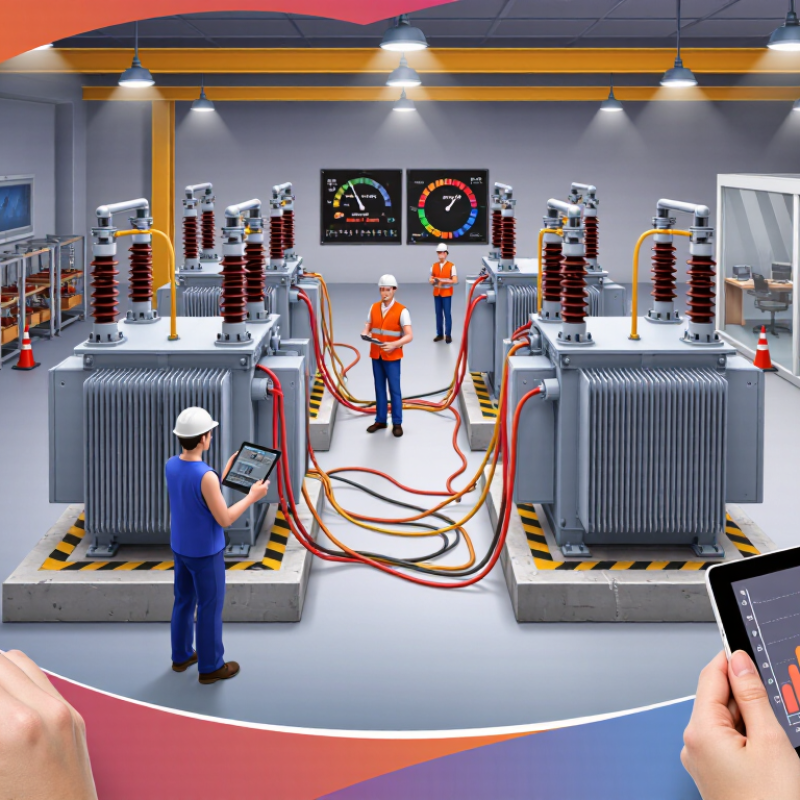
China High-Voltage Transformer Testing: Scope, Ratings, and Service Stages
China Best High Voltage Transformer Testing Services?
China’s high-voltage transformer testing begins with the nameplate, not a generic checklist. Ratings may include 10 kV, 35 kV, 110 kV, or 220 kV systems. IEC 60076-1 and IEC 60076-3 define key rating and insulation requirements. Testing normally covers winding resistance, turns ratio, insulation resistance, dielectric loss, partial discharge, and applied-voltage withstand. For larger units, short-circuit design review and frequency-response analysis add practical confidence. They also expose hidden transport damage. That matters.
The service usually has three stages. Factory testing confirms design performance before shipment. Site testing checks oil condition, grounding, bushing connections, and installation quality. Commissioning records should compare field results with factory baselines. Periodic diagnosis then uses dissolved-gas analysis, moisture checks, thermal imaging, and load history. IEEE C57.104 provides a recognized framework for interpreting transformer gases, although results still require engineering judgment. China Electricity Council reported about RMB 527.5 billion in power-grid investment during 2023. The IEA estimates global annual grid investment must rise from roughly USD 600 billion to above USD 1 trillion by 2030. Demand is expanding. Testing quality cannot remain a paperwork exercise. In practice, some reports still copy limits without explaining temperature, test configuration, or measurement uncertainty. That weakness deserves review.
GB/T 1094 and IEC 60076 Compliance for 50/60 Hz Transformer Tests
Reliable high voltage transformer testing begins with a clear reading of GB/T 1094 and IEC 60076 requirements. These standards guide routine, type, and special tests for transformers operating at 50 or 60 Hz. A competent testing service should confirm the applicable clauses before energizing equipment. Small details matter.
Experienced engineers normally inspect winding connections, grounding points, oil condition, and nameplate data first. Test programs may include winding resistance, voltage ratio, polarity, insulation resistance, applied voltage, and induced voltage tests. For high voltage units, partial discharge measurement can reveal weaknesses that ordinary checks may miss. Calibrated instruments should record temperature, humidity, test voltage, duration, and measurement uncertainty.
Practical reliability depends on controlled procedures, not impressive claims. Test personnel should use traceable calibration certificates and protect the test area with visible barriers. Reports need original readings, acceptance criteria, equipment identification, and clear deviations from GB/T 1094 or IEC 60076. Some projects require witnessed testing and bilingual documentation. That should be agreed early.
No laboratory is perfect. Cable layout, grounding, and background interference can affect sensitive measurements. A responsible engineer records these influences instead of hiding them. Results may need review when site conditions differ from factory conditions. This honest step often prevents expensive misunderstandings during installation and commissioning.
Routine Tests: Resistance, Ratio, Losses, and No-Load Current
China Best High Voltage Transformer Testing Services?
Routine Tests: Resistance, Ratio, Losses, and No-Load Current
Reliable transformer testing begins with controlled routine checks, not impressive paperwork. Qualified laboratories use calibrated instruments, trained engineers, and documented procedures. Test conditions should include winding temperature, applied voltage, connection method, and instrument accuracy. Small omissions can change the result.
Winding resistance testing helps identify loose connections, poor contacts, or uneven winding conditions. Engineers record readings at each phase and compare temperature-corrected values. Ratio testing confirms the relationship between high-voltage and low-voltage windings. It also checks tap-changer positions. A wrong connection can produce a believable but incorrect ratio.
That mistake happens.
Loss and no-load current tests measure transformer behavior under energized, unloaded conditions. Core losses may reveal problems with magnetic steel, joints, or manufacturing quality. No-load current should remain balanced and consistent with the design. Engineers should watch the waveform, sound, temperature, and measurement stability. Sudden changes deserve investigation, even when the final report appears acceptable.
Resistance measurements can be affected by unstable contact pressure. No-load readings may drift before the core reaches steady conditions. Therefore, experienced technicians repeat doubtful measurements instead of forcing a clean conclusion. Results should be traceable, reviewed independently, and compared with approved technical requirements. A practical test report explains both the numbers and the conditions behind them.
Dielectric Tests: 1-Minute AC Withstand and 1.2/50 μs Impulse Testing
China Best High Voltage Transformer Testing Services?
For high-voltage transformers, dielectric testing exposes insulation weaknesses before energization. The one-minute AC withstand test applies a specified power-frequency voltage for 60 seconds. IEC 60076-3:2018 defines insulation levels and test requirements according to transformer voltage class. The test room must control clearances, grounding, humidity, and background noise. Small details matter.
The 1.2/50 μs lightning impulse test reproduces a steep surge: 1.2 μs front time and 50 μs time to half-value. IEC 60060-1:2010 specifies impulse measurement principles, including waveform accuracy and voltage recording. Technicians normally apply full-wave impulses, monitor disruptive discharge, and compare oscillograms. IEEE C57.12.90 also describes transformer dielectric test methods and measurement practices.
Professional testing should preserve raw records, calibration certificates, ambient conditions, and each applied voltage level. CIGRE Technical Brochure 642 emphasizes failure investigation and consistent field data for transformer reliability analysis. A pass result is not merely “no flashover.” The waveform must remain valid, and measurement uncertainty needs review. In practice, a clean report can still hide a weak bushing connection. That is why repeat checks, visual inspection, and experienced interpretation remain necessary. Not every abnormal trace indicates breakdown, but ignoring it is poor engineering.
High-Voltage Transformer Dielectric Testing
Representative waveforms for a 1-minute AC withstand test and a 1.2/50 μs lightning impulse test. Voltage is normalized to the test crest value because the applied level depends on the transformer insulation class and rated voltage.
AC withstand duration
60 seconds
Representative AC frequency
50 Hz
Impulse front time
1.2 μs
Impulse half-value time
50 μs
The AC graph shows the first 40 ms of a continuous 50 Hz sinusoidal test voltage; the actual withstand test continues for 60 seconds. The impulse graph uses normalized voltage and nominal 1.2/50 μs timing, where the waveform reaches its crest at approximately 1.2 μs and falls to 50% at 50 μs.
Special Diagnostics: DGA, Partial Discharge, and 20 Hz–2 MHz SFRA
China Best High Voltage Transformer Testing Services?
Reliable transformer testing begins with evidence, not a single pass-or-fail result. Dissolved Gas Analysis (DGA) detects hydrogen, methane, ethylene, and acetylene in insulating oil. These gases can indicate overheating, arcing, or paper insulation damage. IEC 60599 and IEEE C57.104 provide interpretation guidance, but field experience remains essential. Sampling errors, temperature changes, and contaminated bottles can distort conclusions.
Partial discharge testing adds another layer. Under IEC 60270, specialists measure apparent charge and study phase-resolved patterns. A quiet waveform is not always reassuring. Shielding, grounding, and background noise can hide weak activity. Experienced engineers compare factory data, commissioning results, and recent trends. CIGRE Technical Brochure 676 highlights the value of condition assessment for managing transformer ageing and maintenance decisions.
Sweep Frequency Response Analysis examines mechanical movement inside the active part. The 20 Hz–2 MHz range covered by IEC 60076-18 can reveal winding displacement, core movement, or clamping changes after transport and short-circuit events. Technicians should compare traces against factory fingerprints and phase symmetry. CIGRE Technical Brochure 642 reviewed 964 transformer failure records, showing why mechanical and insulation defects deserve attention. A clean SFRA curve can still mislead when test leads, grounding, or tap positions differ. That weakness matters. High-voltage testing in China should therefore combine DGA, PD, and SFRA with calibrated instruments, documented procedures, and engineers who can explain uncertainty clearly.
FAQS
GB/T 1094 and IEC 60076 guide routine, type, and special transformer tests.
They should check winding connections, grounding points, oil condition, and nameplate information. Small details matter.
Common tests include winding resistance, voltage ratio, polarity, insulation resistance, and applied voltage testing.
It applies power-frequency voltage for 60 seconds and checks insulation performance before energization. The setup must be controlled.
It reproduces a steep lightning-like surge with a 1.2 μs front and 50 μs half-value time.
Records should include readings, voltage levels, temperature, humidity, calibration details, and measurement uncertainty. A pass alone is incomplete.
Oil gases such as hydrogen, methane, ethylene, and acetylene may indicate overheating, arcing, or insulation damage.
Partial discharge can reveal insulation activity, while SFRA may identify winding movement, core movement, or clamping changes.
Yes. Cable layout, grounding, noise, tap position, and site conditions can distort results. Engineers should record imperfections honestly.
Conclusion
China High Voltage Transformer Testing Services cover the complete evaluation process for power transformers, from design verification and factory acceptance to installation and commissioning. Testing is typically aligned with GB/T 1094 and IEC 60076 requirements for 50/60 Hz transformers, with attention to rated voltage, capacity, insulation level, and operating conditions. Routine tests commonly include winding resistance, voltage ratio, phase displacement, load losses, impedance, and no-load current to confirm manufacturing quality and operating performance.
Dielectric verification includes one-minute AC withstand testing and 1.2/50 μs lightning impulse testing to assess insulation strength under normal and transient conditions. For deeper condition assessment, specialized diagnostics such as dissolved gas analysis (DGA), partial discharge measurement, and sweep frequency response analysis (SFRA) across 20 Hz–2 MHz can identify overheating, insulation deterioration, winding deformation, or transport-related damage. Together, these test stages provide a structured basis for safety, reliability, compliance, and long-term transformer maintenance.